
Why speed is weakening fashion brand differentiation
As reaction cycles compress, fashion brand differentiation increasingly depends on depth, judgement and knowing when not to move with the market

For years, fashion treated speed as competitive advantage. Faster drops kept brands visible, faster content kept them inside the conversation and faster reactions to emerging trends reduced the perceived risk of arriving late. The logic worked particularly well when information moved unevenly and access itself created an advantage.
That environment has changed. Trends now circulate almost instantly, runway imagery reaches global teams simultaneously and emerging aesthetics can move from niche reference to mass visibility before many brands have completed a first sample. When everybody has access to similar signals and is under pressure to respond at similar speed, acceleration begins producing an unexpected consequence: outputs converge.
The same colours arrive together, the same silhouettes are interpreted at similar moments and the same cultural references move rapidly from interesting to ubiquitous. Speed has not disappeared as a business requirement, but it is becoming a weaker source of fashion brand differentiation. What increasingly separates one brand from another is the depth of the decision made before anything is produced.
When everyone reacts quickly, everyone starts reacting alike
The problem is not simply that fashion moves too fast. It is that compressed decision-making leaves less room for interpretation.
When an emerging signal has to become a product, campaign or piece of content immediately, there is little opportunity to interrogate why it matters, whether it belongs to the brand or how substantially it should be transformed before it reaches the customer. The quickest translation is usually the most literal one, which is precisely why the same visual ideas begin appearing across multiple brands at once.
A longer process creates different possibilities. References can be questioned rather than simply collected, initial ideas can be rejected and product can move through several iterations before its strongest expression becomes apparent. Time allows a brand’s own design language to intervene.
This does not mean slow for the sake of slow. The strategic shift is towards recognising that some decisions benefit from acceleration while others lose value when compressed.

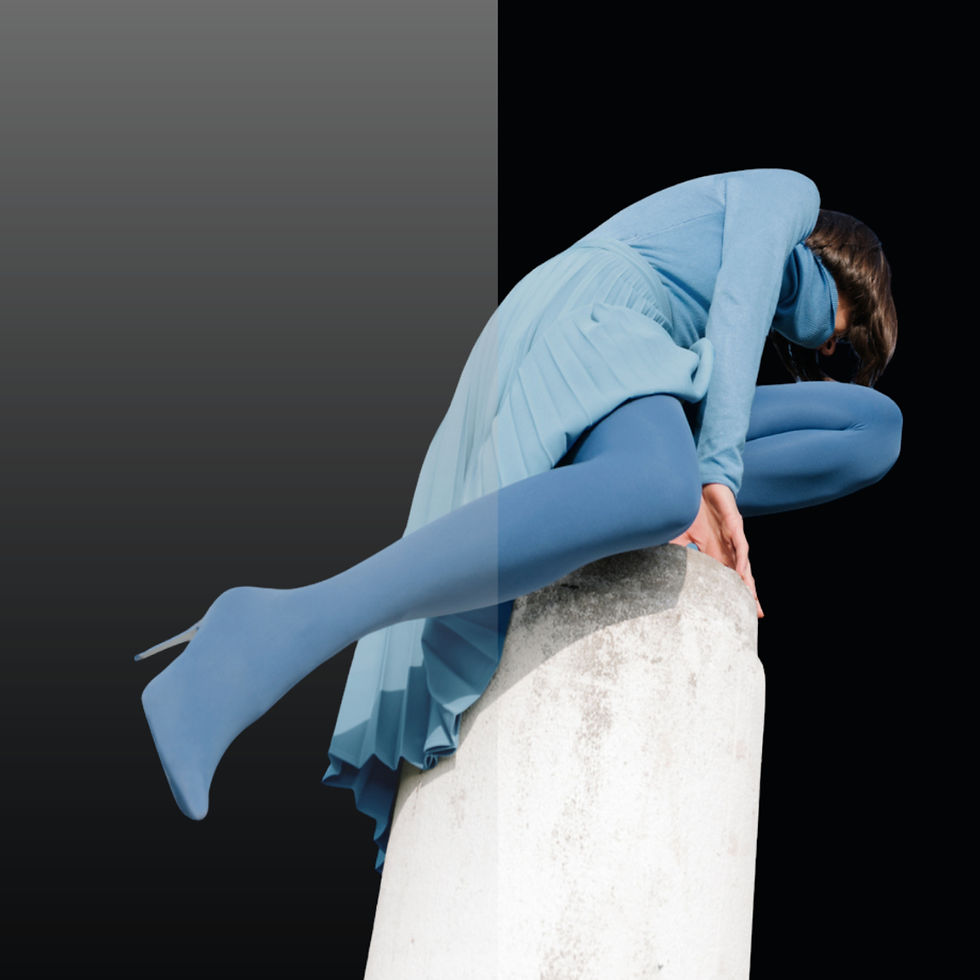
Alaïa. Fitting turns time into a design tool, allowing proportion, movement and construction to be refined through repeated decisions rather than rushed towards the next release.
The scarce resource is becoming judgement
Fashion no longer has an information shortage. The industry has the opposite problem.
Creative teams can access enormous volumes of runway imagery, consumer data, cultural commentary, social signals and visual references, while generative tools can multiply concepts at extraordinary speed. Producing another option is becoming progressively easier.
Deciding which option deserves development is harder.
That moves value away from pure output and towards judgement. The brands that stand apart will increasingly be those able to establish hierarchy: identifying which signals have longevity, which ideas strengthen an existing point of view and which apparently urgent movements can safely be ignored.
Fashion brand differentiation is therefore becoming less about being first to notice everything and more about being unusually selective about what happens next.
Time is becoming a creative input
The fashion industry often treats time as a production constraint, but it is also one of the materials from which stronger product is built.
A fitting changes proportion. A second sample exposes a construction problem that was invisible on paper. Repeated handling reveals whether a material behaves as expected, while distance from an initial idea can make it easier to recognise whether the concept genuinely belongs to the collection or was simply exciting in the moment.
Those stages are difficult to compress without consequence.
The renewed value placed on craft, human judgement and visibly considered product is therefore connected to something larger than nostalgia for traditional making. These processes signal that an object has survived editing. It has been touched, reconsidered and refined rather than simply generated and released.
In a market saturated with immediacy, evidence of time can itself begin to create value.
MOVE EARLIER, NOT JUST FASTER
Innovator Elite is built to give brands more space between seeing a signal and turning it into product.
Macro Trends establish the wider cultural movements behind change, Micro Trends identify more focused shifts, Design Directions move those signals closer to the garment and Colour Lab tracks how changing emotional and cultural conditions are influencing colour.
The objective is not to accelerate every trend into your collection. It is to give you the context to decide what deserves development, what needs watching and what should be left outside your design language entirely.

Innovator Elite Membership
For teams that need the wider intelligence behind the product, Innovator Elite connects Macro Trends, Micro Trends, Design Directions, Colour Lab, seasonal forecasts and practical resources within one membership.

Slowness only matters when it produces depth
There is an important distinction here. Moving slowly does not automatically create better fashion any more than moving quickly automatically creates generic fashion.
The advantage comes from what the additional time allows a brand to do.
It can investigate fewer ideas more thoroughly, develop proprietary construction rather than rely on familiar formulas, build stronger relationships between products and test whether an emerging movement remains relevant once its initial novelty has faded. Most importantly, it gives teams space to remove ideas that do not strengthen the collection.
Depth becomes the differentiator because depth is difficult to imitate quickly.
That creates an interesting strategic counterweight to acceleration. Instead of competing to shorten every cycle, brands can decide where time produces enough additional value to justify protecting it.
A different pace can become part of the point of view
Distinctive brands do not necessarily move at one speed.
Some decisions should happen quickly because the information is clear and the opportunity is immediate. Others need resistance. A signature product may deserve several rounds of development, an unfamiliar silhouette may require time for the team to understand it and a cultural signal may need to mature before its relevance becomes clear.
The important shift is moving away from the assumption that faster is automatically better.
Once speed becomes universal, moving at a different pace can itself become strategic. A brand that waits long enough to interpret a movement rather than reproduce its first visible expression may arrive later to the aesthetic but earlier to the more meaningful idea underneath it.
That is a far more durable form of fashion brand differentiation.
Final perspective: Fashion brand differentiation
Fashion does not need to become slow.
It needs to become more deliberate about where speed creates value and where it removes it.
When every brand can access similar information almost simultaneously, reacting first becomes less powerful. The greater advantage lies in deciding differently: spending more time on the ideas capable of strengthening the product, refusing signals that do not belong and allowing enough development for an initial reference to become something recognisably your own.
This is where Innovator Elite sits within the process. The wider cultural intelligence creates context before product decisions begin, reducing the pressure to react to every visible shift simply because everybody else can see it too.
The next competitive advantage may not be another acceleration.
It may be knowing which decisions deserve more time.
Choose how you forecast

The Forecast Library
Focused direction when you need it.
Individual fashion trend forecasts for brands that need focused direction across colour, macro trends, print, silhouette, materials and key product categories.
Choose the season and category relevant to your collection, with clear intelligence designed to help you understand what is shifting and turn emerging signals into sharper product decisions.
Join Innovator Elite
The complete Trend Suite forecasting system.
For brands and product teams that need the full view. Access the Forecast Library, every new release, Colour Lab, Macro Trends, Micro Trends, Design Directions and practical resources in one connected platform.
Built for continuous access across seasons and categories, so your forecasting intelligence stays connected rather than pieced together.


