
Fashion trend forecasting system: From cultural shift to product decision
A fashion trend forecasting system becomes more useful when cultural change can be followed all the way through to colour, silhouette and product direction
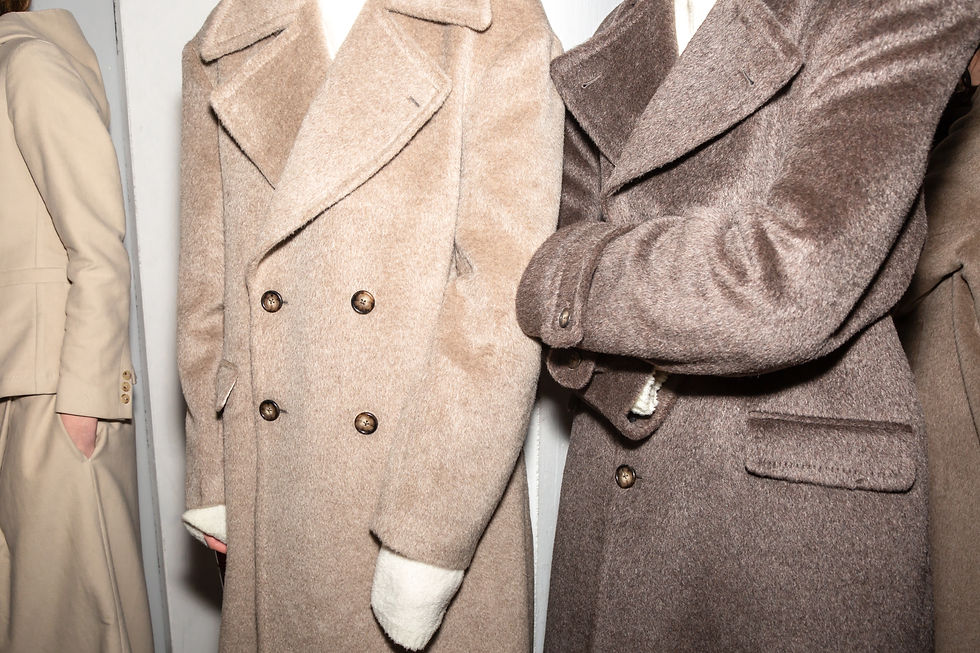
Fashion rarely changes in a straight line. A new silhouette does not suddenly appear without context, a colour does not become important in isolation, and a product detail rarely gains momentum simply because several designers happened to use it at the same time. What eventually becomes visible on the runway is often the later expression of changes that have been developing across culture, consumer behaviour, design, technology and aesthetics for considerably longer.
The difficulty for brands is that those changes tend to arrive as fragments. One signal appears in colour, another in proportion, another in materials, while a wider cultural movement may still feel too abstract to connect directly to product. Look at each one separately and the season can appear to contain hundreds of unrelated trends; understand how they connect and a much clearer direction begins to emerge.
That is the thinking behind Trend Suite. Rather than treating forecasting as a sequence of isolated reports, the platform is designed to move from the broadest cultural shifts towards increasingly specific product decisions, helping designers, founders and product teams understand not only what is changing, but how that change can become relevant to a collection.
A fashion trend forecasting system should start before the product
The most visible part of fashion is usually the product, which makes it tempting to begin research there. Designers see a new neckline, trouser proportion, colour or print gaining momentum and understandably start thinking about how it might translate into their own collection.
Yet product is often the end of the story rather than the beginning.
Behind many of those visible shifts sits a much broader change in what consumers are responding to, how people want to feel, which ideas are gaining cultural relevance and what forms of design are beginning to look tired. These changes can influence everything from the weight of a garment to the way a colour is perceived, even when the connection is not immediately obvious.
This is why Trend Suite begins with wider intelligence through Macro Trends. These establish the larger cultural, behavioural and aesthetic forces shaping the season, providing context before individual colours, silhouettes or product ideas are considered.
The value is not in turning a macro trend into a literal collection theme. It is in understanding the wider movement strongly enough to recognise how it may begin affecting design decisions elsewhere.
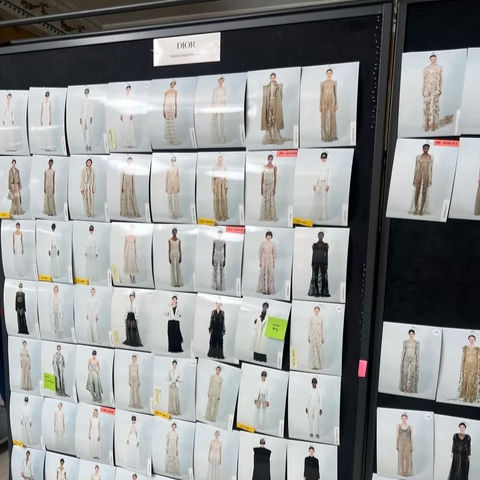
Dior Cruise 2026 backstage. Seeing the collection together makes the relationships between colour, silhouette and product far clearer than viewing each look in isolation.
Macro change becomes more useful when it gets specific
Macro intelligence provides the context, but designers cannot build a collection from broad cultural observations alone. The next stage is understanding how those larger movements begin to fragment into more focused shifts.
This is where Micro Trends become important.
A single macro movement may create several different design responses, each expressing a particular part of the wider change. One may influence tactility and protection, another may affect digital aesthetics, while another begins to alter ideas around craft, structure or emotional value.
The relationship between macro and micro matters because it prevents a trend from becoming overly simplistic. A cultural movement rarely produces one visual answer, and brands should not all respond to it in exactly the same way.
Within Trend Suite, Micro Trends allow those broader changes to be examined at a closer level, making it easier to identify which aspects of a movement have genuine relevance for a particular customer, category or brand position.
That is where forecasting begins to become selective rather than prescriptive.
Design direction is where intelligence starts becoming actionable
There is still another step between understanding a movement and deciding what to design.
A designer may understand the cultural context and recognise the emerging micro direction while still needing to know how that information should influence the collection. Should proportion change? Does the opportunity sit in detail, construction, material, styling or category? Is the shift strong enough to reshape the product, or should it appear more subtly?
This is where Design Directions become particularly useful.
They move the intelligence closer to the decisions being made in the studio, identifying where broader change is beginning to affect the visual and structural language of fashion. Instead of stopping at an abstract idea, the movement can now be considered in relation to shape, detail, proportion and product behaviour.
A useful fashion trend forecasting system should progressively reduce abstraction as the user moves through it. The cultural idea remains important, but every stage brings the intelligence closer to the garment.
This is how Trend Suite is intended to work: not as separate sections competing for attention, but as different levels of the same forecasting process.
Colour needs context too
Colour is often researched independently because it is one of the earliest and most commercially important decisions in seasonal development. Yet a colour becomes significantly more useful when its wider context is understood.
The question is not simply which shades are emerging. It is why they are beginning to matter, how their emotional meaning is changing, which combinations are gaining relevance and how material, finish and surrounding colour can alter their effect.
A familiar neutral can become newly important because its temperature changes. A blue can move from corporate to fluid and emotional. A green can become less botanical and more biological, artificial or digitally mediated. The colour itself may not be entirely new; what has changed is the cultural meaning surrounding it.
Through seasonal Colour Forecasts and Colour Lab, Trend Suite places colour within that wider framework so palette decisions can be made with more context than a list of fashionable shades.
That matters because good colour forecasting is not about telling brands to use the same palette. It is about helping them understand how colour behaviour is changing so they can decide which part of that movement belongs in their own collection.
DISCOVER HOW TREND SUITE CONNECTS THE SEASON
Sharper fashion trend forecasting
From culture to product, in one forecasting system
Trend Suite connects Macro Trends, Micro Trends, Design Directions, Colour Lab and seasonal product forecasts so designers can move from broader cultural change towards increasingly specific product decisions without rebuilding the research process from scratch.
The system is designed to answer different questions at different stages of development. Macro intelligence explains the larger movement, micro intelligence identifies more focused expressions of it, design direction brings those ideas closer to the garment, and seasonal forecasts translate them across colour, pattern, silhouette and product categories.
The advantage is not simply having access to more content. It is being able to see how the different levels of intelligence relate.

Trend Suite
Explore Trend Suite to discover seasonal forecasts, Colour Lab, Macro Trends, Micro Trends, Design Directions and practical resources built to help you move from cultural change to stronger product decisions.

Product forecasts complete the translation
By the time intelligence reaches product-level forecasting, the question has changed considerably.
The starting point may have been a broad cultural movement, but the designer now needs practical direction. What is happening to dresses? Which footwear details are changing? Where is knitwear moving? Which jewellery forms, silhouettes or print behaviours deserve attention?
This is where the seasonal Trend Forecasts complete the translation.
Rather than asking a designer to interpret an abstract macro idea independently, the wider intelligence has already been followed through several levels. The product forecast can therefore focus much more closely on the shapes, details, categories and developments that are becoming relevant.
This also allows designers to enter the system at the point most useful to them. Some teams may begin with the macro picture because they are establishing an entire seasonal direction, while others may need immediate intelligence around colour, dresses, footwear or pattern.
The structure is connected, but the route through it does not have to be linear.
The real value is seeing what connects
There is an important difference between having access to a large amount of forecasting and having a forecasting system.
A library gives you information. A system helps you understand the relationship between that information.
That relationship is increasingly valuable because fashion teams are working across more sources, more seasons and more categories while being expected to make decisions faster. It is easy to accumulate references; it is considerably harder to establish which ones are part of the same movement and which are simply visual coincidence.
A connected structure makes those relationships easier to identify.
When the same underlying movement begins appearing through cultural behaviour, colour, silhouette and product, the signal becomes stronger. When an idea remains isolated, it may deserve observation rather than immediate development.
This is where Trend Suite moves beyond inspiration. The purpose is to give designers enough context to decide not only what is changing, but how seriously that change should influence the collection.
Final perspective: Fashion trend forecasting system
Fashion forecasting becomes considerably more useful when there is a visible route between cultural change and product.
Without that connection, macro intelligence can remain too abstract, product trends can feel disconnected from their wider context and designers are left to reconstruct the relationships between dozens of separate sources themselves.
A connected fashion trend forecasting system works differently. It allows teams to begin with the larger movement, move through more focused signals and ultimately arrive at colour, silhouette, pattern and category direction with a clearer understanding of why those developments matter.
That is what Trend Suite is designed to provide: not another stream of trend information, but a structure for moving from cultural change towards clearer product decisions.
The value is not simply knowing more about what is coming next. It is understanding how the pieces connect before deciding what deserves a place in your collection.
Choose how you forecast

The Forecast Library
Focused direction when you need it.
Individual fashion trend forecasts for brands that need focused direction across colour, macro trends, print, silhouette, materials and key product categories.
Choose the season and category relevant to your collection, with clear intelligence designed to help you understand what is shifting and turn emerging signals into sharper product decisions.
Join Innovator Elite
The complete Trend Suite forecasting system.
For brands and product teams that need the full view. Access the Forecast Library, every new release, Colour Lab, Macro Trends, Micro Trends, Design Directions and practical resources in one connected platform.
Built for continuous access across seasons and categories, so your forecasting intelligence stays connected rather than pieced together.


