
Texture as Memory: Why Tactility Is Becoming Emotional Infrastructure
Updated: Mar 31
How materiality is evolving into a language of change, emotion and reassurance as we embrace texture as memory
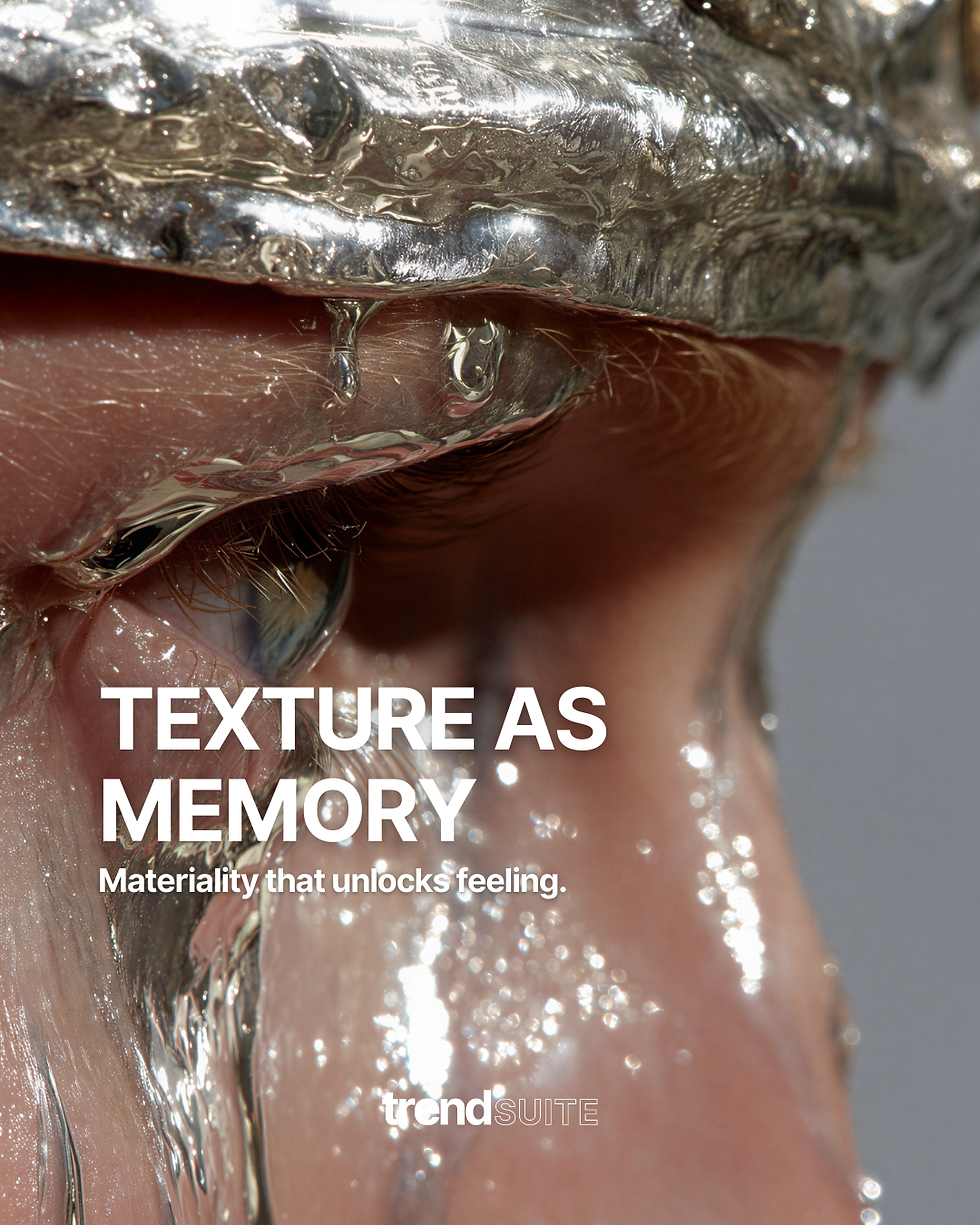
From Visual Impact to Sensory Support
We are living through a sustained period of low-grade stress — not dramatic or acute, but constant and cumulative.
Endless information streams, perpetual comparison and a culture of urgency have quietly reshaped how people move through the world.
As a result, consumers are increasingly seeking products that help regulate how they feel, not just how they appear.
Fashion is responding to this shift by evolving beyond surface-level aesthetic expression and toward sensory support.
Clothing is no longer experienced purely through sight; it is felt, carried and lived in.
Materials, weight and texture are becoming part of how individuals manage emotional states in everyday life.
Reframing Softness, Weight and Texture
Within this context, softness has taken on a new role.
It is no longer simply associated with casual wear or physical comfort, but with emotional reassurance.
Brushed surfaces, plush knits, padded volumes and tactile finishes are increasingly designed to calm before they communicate visually.
At the same time, weight is being reintroduced with purpose. Heavier drape, cocooning layers and wrapped silhouettes provide a stabilising effect, offering a sense of physical grounding in uncertain environments.
Texture works alongside these elements as a form of intimacy. In a world that is visually loud yet physically distant, tactile materials create moments of closeness and presence, responding to a growing desire for sensory connection rather than visual spectacle.
Texture as Memory and Mechanism for Change
These material shifts signal a deeper transformation in how clothing functions culturally. Garments are becoming repositories of feeling — places where memory, comfort and emotional security are stored and revisited through touch.
Texture, in this sense, acts both as memory and as a mechanism for change, helping wearers reconnect with their bodies in a digitally mediated world.
Clothing is increasingly used as a form of emotional containment, offering reassurance without withdrawal.
Consumers are not simply buying garments; they are buying states of feeling that help them navigate complexity with more calm and control.
In this environment, tactility emerges as a new luxury language — not decorative, but regulatory — shaping how fashion responds to a world in flux.
Innovator Elite Trend Membership
The industry is louder than ever—more noise, more trends, more content demanding your attention.
But great design has never come from chasing the feed.
Innovator Elite isn’t about keeping up.
It’s about seeing further.
Trusted by a global community of 3,000+ designers, innovators and brands, Innovator Elite delivers tomorrow’s ideas before they surface—turning instinct into intelligence, creativity into strategy and vision into confident action.
Because the brands who shape the future aren’t reactive.They design it.
Be the brand others study, emulate and admire.Lead with intent. Create with precision. Move ahead of the shift.
Your next chapter starts with clearer thinking, stronger direction and a creative advantage you can feel.
Explore Innovator Elite membership plans today and step into your full Trend Resource.


Our trend hunters delve deep into global trends, identifying the patterns, movements and design directions that are shaping our changing world. We deliver these key insights through a compelling library of fashion trend reports for your brand to access.
Want a clearer way to use Trend Intelligence (without the noise)?
If you’re new here (or you’re rebuilding your process), start with the Trend Toolkit + Forecast Previews hub. It’s designed to take you from inspiration to decisions — quickly, and with intent.
Step 1 — Start here (overview + how it works):
This page explains what the Toolkit is, what the previews show, and how to choose the smartest next step.
→ Visit the Toolkit + Previews page: Start Here
Step 2 — Download the Toolkit (free):
A practical framework you can apply immediately to sharpen your direction and build a stronger seasonal point of view.
→ Download the Trend Toolkit: Free Toolkit
Step 3 — Explore the previews (see the depth before you buy):
These previews show the structure, clarity and application inside Trend Suite forecasts — so you can choose with confidence.
→ Colour Forecast Preview: Colour Forecast Preview
→ Macro Trend Preview: Macro Forecast Preview
→ Swimwear Forecast Preview: Swimwear Forecast Preview
In a market moving at algorithm speed, the brands that win aren’t the ones chasing trends — they’re the ones translating signals into clear, commercial decisions early.


