
The cultural signals shaping fashion before the trend appears
For fashion brands, cultural signals for trend forecasting becomes more useful when it reads anxiety, desire and social friction before they become visible product

Fashion tends to notice cultural change once it has already become visible.
A colour begins appearing across several collections, a silhouette gathers momentum, an aesthetic acquires a name and suddenly the industry begins asking whether it is “a trend”. By that stage, however, the deeper movement has usually been building for considerably longer. The visible expression is simply the point at which a psychological, social or behavioural shift has become easy to photograph.
This is why cultural signals become most valuable before they have resolved into obvious fashion trends. The useful questions are rarely limited to what consumers will want next season. They concern what people are becoming tired of, what they are anxious about, what feels increasingly absent from daily life and which emotional needs existing systems are failing to satisfy.
Those pressures are often where the next fashion language begins.
Cultural signals reveal what culture is trying to correct
Fashion does not exist outside the conditions people are living through. When daily experience becomes heavily digital, physicality and tactility acquire new value. When efficiency becomes relentless, ritual and craft can feel emotionally richer. When artificial imagery becomes ubiquitous, imperfection, sensuality and recognisable human authorship can suddenly carry more cultural weight.
The significance is not simply that a particular aesthetic becomes fashionable. What matters is understanding why certain ideas begin to feel necessary at a particular moment.
A renewed appetite for touch may sit behind heavier materials, brushed surfaces or visibly handmade finishes. Desire for emotional protection may translate into enveloping silhouettes, darker colour or garments with greater physical presence, while fatigue with optimisation can push fashion towards strangeness, fantasy and forms that resist easy categorisation.
The visual outputs are different, but the cultural pressure underneath them may be the same.
For brands, that distinction is critical. Rather than asking whether a visible trend should be copied into the collection, the stronger question is whether the underlying need is relevant to your customer and, if it is, how your own design language should respond.

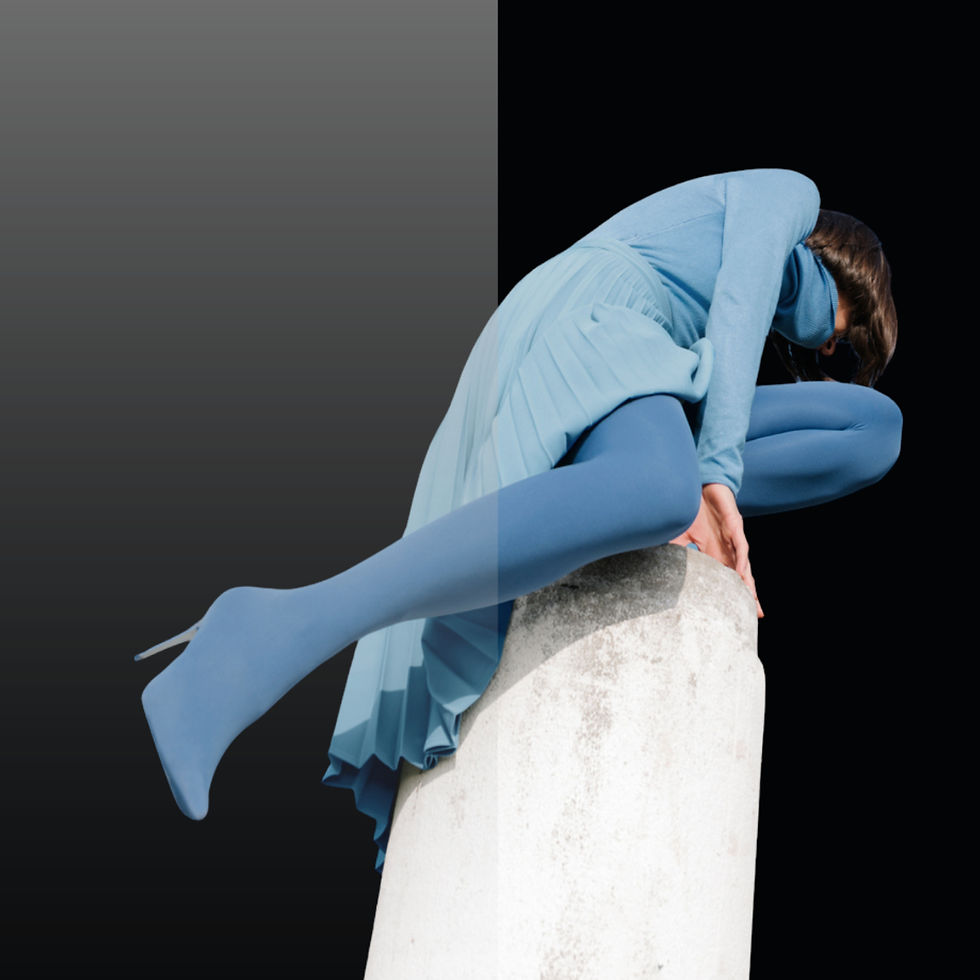
Moschino Spring 2027. Runway fashion was deliberately placed against everyday dress and real people, reinforcing the idea that clothing gains meaning through the wider cultural environment surrounding it.
The visible look can change while the need remains
Aesthetic expressions move quickly. Cultural needs often move much more slowly.
A desire for protection might initially appear through oversized outerwear before moving into denser materials, enclosed necklines or quieter colour. Fatigue with digital perfection could surface through craft, irregularity, raw construction or emotionally provocative imagery. What looks like several unrelated trends can therefore be different manifestations of the same deeper shift.
Reading only the aesthetic encourages literal response.
Reading cultural signals creates options.
That allows brands to move selectively rather than reactively. A womenswear label might translate a wider cultural tension through proportion, while an accessories business may find the stronger opportunity in material, hardware or tactility. Another brand may recognise the same signal and decide that none of its most visible expressions belong within its point of view.
That is not ignoring the market. It is understanding it well enough to choose.
The most useful signals often appear outside fashion first
Some of the strongest cultural signals become visible before fashion has fully absorbed them.
Entertainment, technology, food, interiors, sport, online communities, architecture and shifts in social behaviour can all reveal needs that later emerge in colour, silhouette, surface or product. Repeated interest in analogue experiences may indicate more than nostalgia, just as renewed ritual can point towards a desire for structure and a rise in surrealism or spectacle can suggest that rational environments are beginning to feel emotionally thin.
The important work is not simply gathering references from these areas.
It is recognising when apparently unrelated observations share the same underlying tension.
One signal means very little. Several different signals beginning to point towards the same emotional or behavioural movement are much more significant.
That is the point at which observation begins to become intelligence.
READ THE PRESSURE BEFORE THE PRODUCT
Innovator Elite
Innovator Elite connects the cultural layer of change with the product decisions that follow.
Macro Trends examine the larger shifts reshaping behaviour and attitudes. Micro Trends identify more focused movements emerging from those conditions, while Design Directions move the intelligence closer to silhouette, material, construction and product. Colour Lab tracks how wider emotional and cultural change is reshaping colour meaning and application.
The purpose is not to give brands more trends to follow. It is to provide enough context around change that teams can decide what matters, what does not and how a wider cultural movement should translate through their own collection.

Innovator Elite Membership
For teams that need the wider intelligence behind the product, Innovator Elite connects Macro Trends, Micro Trends, Design Directions, Colour Lab, seasonal forecasts and practical resources within one membership.

Culture is becoming harder to separate from product
A product never enters an empty market.
It arrives into a world already shaped by economic pressure, technological acceleration, social behaviour, competing aesthetics and changing expectations around identity. The same garment can therefore feel compelling in one cultural moment and irrelevant in another without the garment itself having changed.
That is why cultural signals matter long before a design team begins thinking about product.
They establish context.
Once the wider pressure is understood, decisions about colour, material, silhouette and category become easier to evaluate because they are no longer being judged in isolation. A shift can be understood not simply as something new, but as part of a wider change in what people are seeking from fashion.
This is what allows brands to act before a signal has been reduced to another obvious trend.
Sensitivity is becoming more valuable than speed
Fashion has spent years treating faster reaction as competitive advantage. Faster research, faster development and faster response to emerging signals were assumed to create a stronger market position.
Yet when virtually every team can see the same runway imagery, viral aesthetics and social data almost immediately, speed becomes increasingly easy to replicate.
Interpretation is harder.
The stronger advantage lies in distinguishing structural change from temporary attention, identifying when several apparently unrelated movements share the same cultural driver and understanding whether an emerging idea belongs within your brand at all.
Sometimes the most strategic response to a trend is not to use it.
That decision becomes considerably easier when you understand the cultural signal producing it.
Final perspective: Cultural signals
The most useful cultural signals do not tell brands which product will become popular next.
They reveal the conditions making change necessary.
Fashion can register anxiety, fatigue, aspiration, desire and the things people feel are disappearing from their lives. Those pressures eventually become visible through colour, silhouette, material and product, but by the time the aesthetic becomes obvious, the deeper movement has already been developing for some time.
That is the thinking behind Innovator Elite: reading cultural change at its widest level before following it through into increasingly specific design decisions.
The strongest brands will not simply react faster.
They will understand earlier what people are actually responding to.
Choose how you forecast

The Forecast Library
Focused direction when you need it.
Individual fashion trend forecasts for brands that need focused direction across colour, macro trends, print, silhouette, materials and key product categories.
Choose the season and category relevant to your collection, with clear intelligence designed to help you understand what is shifting and turn emerging signals into sharper product decisions.
Join Innovator Elite
The complete Trend Suite forecasting system.
For brands and product teams that need the full view. Access the Forecast Library, every new release, Colour Lab, Macro Trends, Micro Trends, Design Directions and practical resources in one connected platform.
Built for continuous access across seasons and categories, so your forecasting intelligence stays connected rather than pieced together.


