
The strongest fashion brand codes work without a logo
From Hermès saddle stitching to Bottega Veneta Intrecciato, fashion brand codes make product recognisable before the customer sees the name

Remove the logo from a truly distinctive fashion product and the brand should not disappear with it. Something in the construction, proportion, surface, material or detail should still feel specific enough to suggest where it came from. Hermès has saddle stitching, Bottega Veneta has Intrecciato, Chanel has quilting and Loewe has developed a recognisable construction language around pieces such as the Puzzle. None of these codes relies on the customer reading a name first. Their power comes from repetition across time until a design decision becomes part of the brand’s visual memory. This is where fashion brand codes become strategically important: they turn product identity into something the customer can recognise instinctively rather than something the brand has to repeatedly explain.
Recognition lives in the product
Fashion brands often invest heavily in identity around the product while leaving the product itself comparatively anonymous. Typography, campaign imagery, packaging, store design and social content may all be tightly controlled, yet remove those external signals and the underlying garments or accessories could belong to several competitors. Stronger brands build recognition in the opposite direction, beginning with the decisions embedded inside the object itself. A particular stitch, edge treatment, volume, fastening, material combination or approach to construction becomes sufficiently consistent that it starts to function as a visual cue. The important point is that these details are not decorative signatures added after the design has been resolved; they are part of the logic through which the product is designed in the first place.

Bottega Veneta. Intrecciato demonstrates how a construction technique can become a recognisable brand asset, carrying identity through material and making rather than through overt logo placement.
A brand code is bigger than one signature product
There is also a difference between owning a recognisable product and owning a recognisable design language. A hero bag, shoe or jacket can create enormous visibility, but if recognition depends entirely on that one object, the brand eventually faces a difficult choice between repeating it indefinitely and losing the identity attached to it. A stronger system identifies what sits underneath the successful product. Perhaps the real code is the relationship between softness and structure, an exaggerated proportion, visible handwork, a particular treatment of leather or a recurring tension between refinement and utility. Once those principles are understood, they can travel into new categories without requiring every collection to reproduce the same answer.
The most valuable codes can evolve
The power of Intrecciato is not simply that Bottega Veneta repeats woven leather. Its value lies in how recognisable construction has been allowed to change scale, density, material, colour and application while remaining connected to an underlying house language. This is the difference between repetition and evolution. A rigid formula gradually loses energy because every new product resolves in the same way, while a strong code creates a set of boundaries within which designers can continue experimenting. Chanel quilting can move between bags, clothing and accessories; Hermès craftsmanship can appear through different objects; Loewe’s approach to construction can be recognisable without every product becoming another Puzzle. Recognition survives because the principle persists even while its expression moves.
IF THE LOGO DISAPPEARED, WHAT WOULD STILL BE YOURS?
Brand Code is built around this question
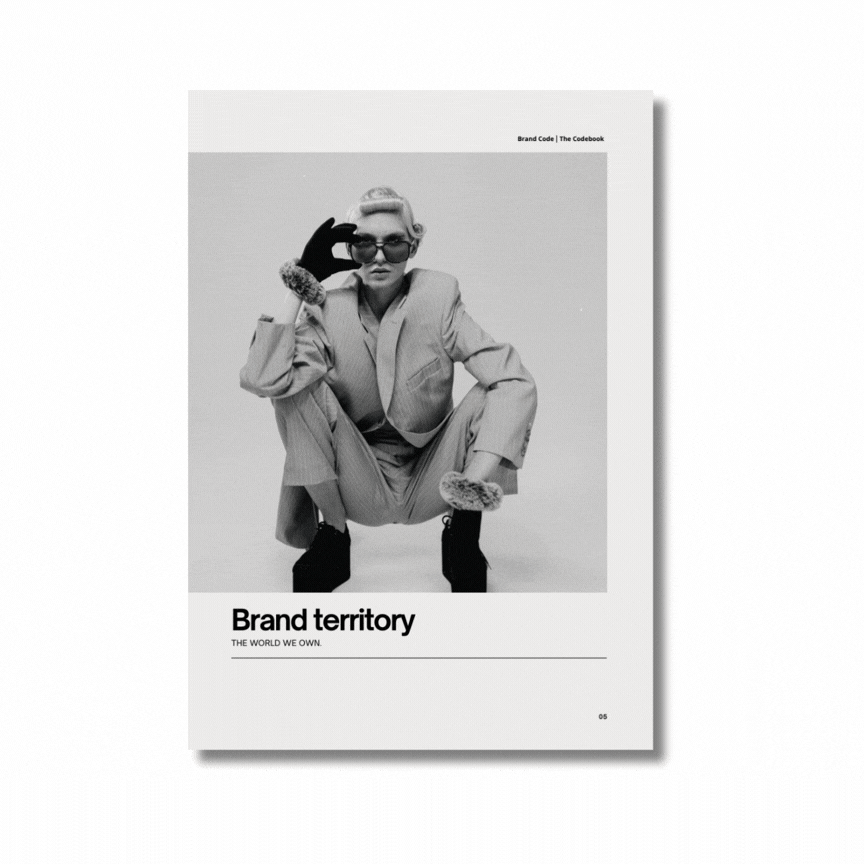
Brand Code is a four-part methodology for founders, designers and teams who already have a fashion brand, product language or established creative instinct and need to define what makes it recognisable enough to protect and flexible enough to evolve.
It is not a branding book about logos, typography, tone of voice, customer personas or mission statements. The System, Workbook, Codebook and Code Sheet help define the creative and product logic underneath the brand — from Brand Territory and Core Codes to Defining Tensions, Value Signals and what should remain fixed, evolve or introduce newness from one collection to the next.
The goal is simple: recognition without repetition.

Brand Code
Brand Code is a four-part fashion methodology for defining, codifying and applying the creative and product logic that makes your brand distinctive, recognisable and relevant.
Codes create a filter for newness
Once a brand understands its codes, trend intelligence becomes considerably more useful because every emerging idea no longer arrives with equal weight. A new silhouette can be evaluated against the proportions the brand already owns, an unfamiliar material can be assessed against its established value signals and a cultural shift can be translated through existing tensions rather than imported literally into the collection. This turns brand identity into an active decision-making tool rather than a retrospective description of what previous collections happened to share. The strongest codes do not prevent experimentation; they create the filter that allows teams to experiment further while still understanding when an idea has moved outside the territory that makes the brand distinctive.
Distinctive brands are built through exclusion
The more clearly a brand understands what belongs, the easier it becomes to identify what does not. This is increasingly valuable in a fashion environment where every team has access to the same runways, cultural signals, references and emerging aesthetics. Distinction rarely comes from seeing something nobody else has seen; it comes from making a different decision about what deserves to move forward. A brand with defined codes can reject a commercially tempting trend because it weakens the product language, or take an apparently unrelated movement and translate it in a way that feels unmistakably its own. Those exclusions gradually create territory around the brand, narrowing the available choices while making the remaining decisions much more specific.
Final perspective: Fashion brand codes
The strongest fashion brands do not become recognisable because they repeatedly tell customers who they are. Recognition accumulates through product decisions that appear often enough, and evolve intelligently enough, to become associated with one particular point of view.
A stitch can become a code. So can a construction method, a proportion, a material relationship or the tension created between two seemingly opposing ideas. The individual detail matters less than the system around it: how consistently it appears, how widely it can travel and how much change it can absorb without losing its identity.
That is the real purpose of Brand Code. Not to make every collection look the same, but to define what should remain recognisably yours while everything else continues to move.
THE COLOUR SIGNALS BRANDS WILL BE BACKING FOR SS28
FREE SS28 Colour edit
A free edit of five colour signals beginning to shape Spring Summer 2028 womenswear.
From humanised neutrals and purposeful pales to stranger greens, fluid blues and measured brightness, this is the early read for brands deciding what deserves space next.
Use it to sharpen palette direction, challenge the obvious and start SS28 with a stronger point of view.

Choose how you forecast

The Forecast Library
Focused direction when you need it.
Individual fashion trend forecasts for brands that need focused direction across colour, macro trends, print, silhouette, materials and key product categories.
Choose the season and category relevant to your collection, with clear intelligence designed to help you understand what is shifting and turn emerging signals into sharper product decisions.

Join Innovator Elite
The complete Trend Suite forecasting system.
For brands and product teams that need the full view. Access the Forecast Library, every new release, Colour Lab, Macro Trends, Micro Trends, Design Directions and practical resources in one connected platform.
Built for continuous access across seasons and categories, so your forecasting intelligence stays connected rather than pieced together.


