
When Fashion Glitches: Why Fashion Trend Forecasting Is Shifting From Trends to Systems
Fashion trend forecasting is moving beyond colours, silhouettes and seasonal aesthetics to understand the cultural systems creating instability, friction and entirely new design languages

The fashion industry has always relied on patterns. Designers, buyers and product teams look for recurring signals that suggest what consumers will want next season. But those patterns are becoming harder to recognise. Cultural movements no longer arrive in neat cycles, and aesthetics no longer evolve in predictable ways. Instead, they collide, fragment and overlap, producing collections that feel deliberately unresolved. What once looked like mistakes, contradictions or visual noise increasingly represents a new design vocabulary. Fashion is not becoming chaotic; it is becoming more complex.
This is why forecasting can no longer rely solely on identifying the next colour, fabric or silhouette. The real opportunity lies in understanding the systems producing these shifts. Rather than asking what is trending, brands need to ask why familiar visual rules are beginning to break down and what those disruptions reveal about changing consumer behaviour.
The age of coherent aesthetics is fading
For decades, fashion was organised around recognisable aesthetic movements. Minimalism replaced maximalism. Tailoring followed sportswear. One dominant direction would emerge before gradually giving way to another. While these transitions were rarely simple, there was usually enough coherence for designers to identify a prevailing mood.
Today that coherence is becoming harder to find. Consumers move between contrasting aesthetics with remarkable speed, often embracing apparently conflicting identities at the same time. Social platforms compress countless visual references into a single feed, dissolving traditional hierarchies between luxury, streetwear, archival fashion and digital culture. Instead of one dominant narrative, multiple narratives exist simultaneously.
As a result, desire no longer concentrates around a single look. It disperses across countless micro-signals, making fashion feel less stable than it once did. The challenge for brands is not keeping pace with every aesthetic, but recognising the deeper forces driving this fragmentation.
Friction is becoming a design language
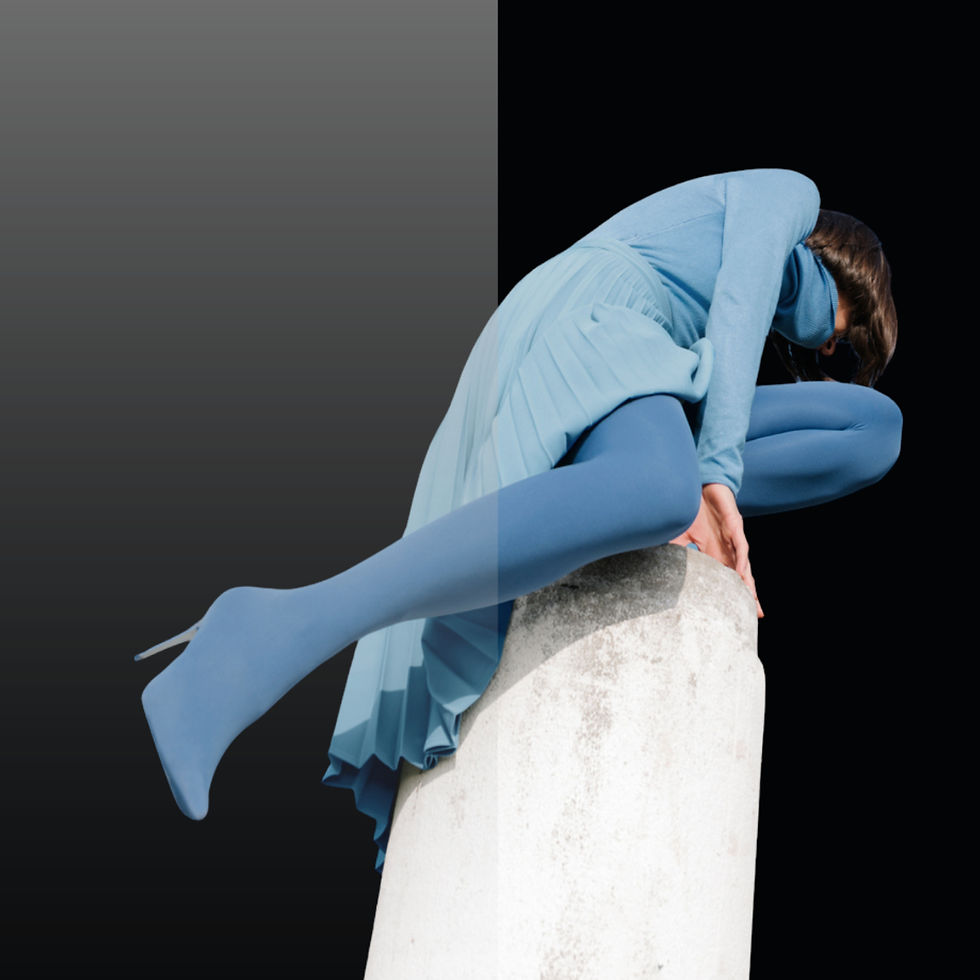
Many of the strongest collections no longer seek perfect balance. Instead, they deliberately introduce tension. Proportions feel slightly unresolved. Surfaces appear distressed, distorted or unexpectedly layered. Tailoring becomes asymmetrical, accessories interrupt silhouettes and materials create subtle visual discomfort rather than polished perfection.
These decisions are not random. They reflect a wider cultural environment shaped by uncertainty, technological acceleration and constant information overload. Fashion increasingly mirrors the emotional conditions people are living through rather than offering escape from them.
This explains why distortion, awkwardness and misalignment are becoming valuable creative tools. They communicate complexity, authenticity and movement in a world where polished perfection can feel strangely disconnected from reality. What once appeared visually incorrect is increasingly recognised as culturally relevant.
Forecasting is becoming the study of systems
This shift changes the role of trend forecasting itself. It is no longer enough to document emerging aesthetics after they appear. The more valuable task is understanding the systems creating them.
Economic pressure, digital behaviour, artificial intelligence, environmental change, shifting values and new consumer psychology all influence how products are designed and how collections are received. These forces rarely produce direct trends. Instead, they reshape the conditions from which trends emerge.
For design teams, this means moving beyond surface observation. Understanding why silhouettes become unstable or why consumers suddenly respond to awkward proportions creates stronger product decisions than simply copying visual outcomes. Forecasting becomes less about prediction and more about interpretation.
What it means for distinctive brands
The brands that will lead the next decade are unlikely to be those reacting fastest to every aesthetic shift. They will be the brands capable of recognising meaningful patterns beneath apparent disorder.
When visual culture feels fragmented, coherence becomes a competitive advantage. Strong collections are built by understanding which signals deserve attention and which merely create noise. The goal is not to remove complexity but to organise it into a distinctive point of view that feels both culturally relevant and unmistakably your own.
The future of fashion belongs to brands that can decode instability without becoming unstable themselves.
Final perspective: Trend forecasting
Fashion is entering a period where systems matter more than styles. As cultural signals become increasingly fragmented, the role of fashion trend forecasting is shifting from identifying isolated trends to interpreting the deeper structures shaping consumer behaviour and product direction. For brands with a strong point of view, understanding those systems will become far more valuable than chasing the next aesthetic moment.

The Forecast Library
Individual fashion trend forecasts for brands that need focused direction across colour, macro trends, print, silhouette, materials and key product categories.
Built to help you understand what is shifting and turn cultural signals into sharper product decisions.
Join Innovator Elite
The full Trend Suite membership for brands that want the complete view.
Access the forecast library, every new release, member-only insight and Fashion CAD Suite tools in one place — so seasonal direction stays connected, not pieced together.

Trend Advisory
A fast expert audit for fashion brands that need sharper direction before development moves forward.
We review your brand, collection or product focus and identify what to refine, strengthen and do next.


