
Why repetition is becoming a stronger fashion brand identity strategy than reinvention
As microtrend churn accelerates, fashion brand identity is becoming more recognisable through repeated proportions, materials and wardrobe codes rather than constant aesthetic resets

Fashion has spent years rewarding reinvention. Every season is expected to deliver a new mood, a different reference point and enough visible change to justify another round of product, imagery and communication. Yet the accelerating pace of trend cycles is beginning to expose the weakness in that model: when every collection is designed to look newly different, brands can become increasingly difficult to recognise.
The alternative is not stagnation. It is repetition with intent.
Phoebe Philo offers one of the clearest examples of how this can work. Familiar proportions return, black and white recur, tailoring remains controlled, leather continues to carry weight and certain relationships between volume, restraint and utility are allowed to develop rather than disappear after a single season. The point is not that nothing changes; it is that change happens inside a recognisable system.
That distinction is becoming increasingly important to fashion brand identity. In an environment saturated with microtrends, visual references and rapid aesthetic turnover, consistency can begin to look more distinctive than novelty.
The uniform is becoming the signature
A strong personal uniform removes noise.
The same idea applies to a brand. When certain proportions, colour relationships, materials or product categories recur consistently, they begin to form a visual vocabulary that customers can recognise before they consciously identify why.
This is not repetition in the sense of reproducing the same garment indefinitely. The value lies in repeating the code while evolving the execution. A familiar shoulder can become sharper, a recurring trouser volume can change fabrication, a signature collar can shift scale, while a known material relationship can be pushed into a new category.
Over time, those repetitions accumulate meaning.
The result is increasingly relevant because customers are being exposed to more fashion than ever. When every week introduces another aesthetic, another reference and another rapidly circulating microtrend, the brands with the clearest internal language become easier to identify amid the noise.
A recognisable fashion brand identity therefore starts to function as a form of compression. The customer does not need every collection explained from the beginning because the underlying codes already provide context.

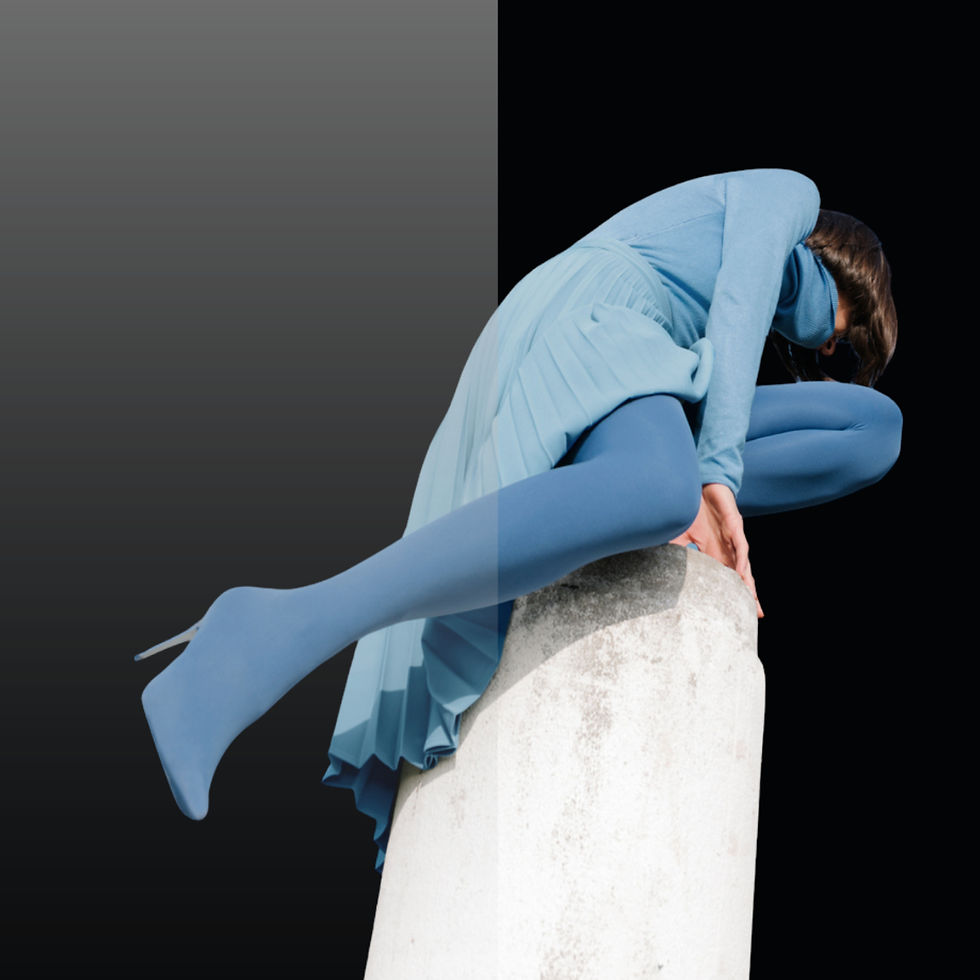
A personal uniform can become more distinctive through repetition, because familiar proportions and materials gain authority when they are refined rather than replaced.
Reinvention is becoming overrated
Constant reinvention can appear creatively ambitious, but it carries a strategic cost.
When a brand radically changes its aesthetic territory every season, customers have to relearn what it represents. Product may remain individually strong, yet recognition becomes harder to build because the visual language never stays in one place long enough to accumulate cultural value.
Refinement creates a different kind of momentum.
Instead of searching continuously for the next completely new proposition, the focus moves towards improving what is already distinctive: better cut, stronger proportion, more specific materiality and clearer relationships between familiar elements.
This can make the product feel more considered rather than repetitive.
The Row, Rick Owens, Prada and Jonathan Anderson approach this principle in very different ways, but the underlying logic is similar. Their wardrobes do not look alike, yet each repeatedly returns to certain tensions, proportions, materials or cultural codes until those choices become unmistakably associated with the brand.
The lesson is not to find a uniform and freeze it. It is to identify the territory worth owning and develop enough depth within it that novelty is no longer the only way to create interest.
Trend awareness should support continuity, not destroy it
This is where forecasting becomes particularly useful.
The purpose of trend intelligence is not to give a brand a new identity every season. It is to show where the wider market is moving so the brand can decide which changes belong inside its existing language.
A shift in proportion might justify altering a familiar silhouette without abandoning it. A seasonal colour movement could update an established palette rather than replace it, while a new material direction may give a signature category fresh relevance without changing the fundamental product architecture.
This is a more sophisticated relationship with trend.
Instead of asking What should we become next season?, the brand asks Which parts of what is changing can strengthen what we already are?
That question becomes increasingly important when trend cycles accelerate, because responding literally to every visible movement creates a collection that may look current while gradually weakening the codes that make the brand recognisable.
EVOLVE THE SIGNATURE, NOT THE ENTIRE BRAND
The Forecast Library
The Forecast Library is designed to help brands see where the season is moving without asking them to surrender their own point of view.
The value is not in following every forecast literally. It is in using stronger seasonal intelligence to decide where your existing codes should evolve, where they should remain consistent and which emerging ideas do not belong at all.

Trend Suite Forecasts
Seasonal forecasts across colour, silhouette, pattern and specific product categories provide the wider market context needed to identify what is genuinely changing, which shifts are gaining momentum and where new direction may be relevant to your collection.
Repetition makes selective change more powerful
A strong signature can actually make experimentation easier.
When most of the visual system is recognisable, a new proportion, colour or material becomes more noticeable because it is being introduced against a stable background. The customer can identify what has changed without losing the wider sense of the brand.
This creates a useful hierarchy between continuity and movement.
The permanent elements provide recognition, while selected seasonal shifts provide freshness. A familiar trouser becomes newly relevant through altered volume, a known coat gains tension through a different neckline, or a recurring neutral palette acquires depth through one unexpected colour family.
Forecasting becomes more valuable within this framework because it helps identify where change is worth introducing rather than treating the entire season as an instruction to start again.
The strongest collections often feel new without feeling unfamiliar.
That is a much harder balance to achieve than simple reinvention, but it is also where a distinctive brand begins to build long-term cultural value.
Final perspective: Fashion brand identity
The return of the personal uniform reflects something larger than a styling preference.
It signals growing fatigue with constant aesthetic turnover and a renewed appreciation for continuity, recognition and refinement. In fashion, repetition is beginning to feel less like creative limitation and more like confidence.
That has important implications for fashion brand identity.
The strongest brands do not need to prove their relevance by becoming unrecognisable every season. They understand their core codes well enough to let the market move around them, selectively absorbing the changes that strengthen their point of view while leaving the rest outside the collection.
The opportunity is not to reject trends.
It is to use them without losing yourself.
Choose how you forecast

The Forecast Library
Focused direction when you need it.
Individual fashion trend forecasts for brands that need focused direction across colour, macro trends, print, silhouette, materials and key product categories.
Choose the season and category relevant to your collection, with clear intelligence designed to help you understand what is shifting and turn emerging signals into sharper product decisions.
Join Innovator Elite
The complete Trend Suite forecasting system.
For brands and product teams that need the full view. Access the Forecast Library, every new release, Colour Lab, Macro Trends, Micro Trends, Design Directions and practical resources in one connected platform.
Built for continuous access across seasons and categories, so your forecasting intelligence stays connected rather than pieced together.


