
Fashion collection planning: Why too many good ideas can weaken the final collection
Fashion collection planning works best when colour, pattern and influence are edited into one clear seasonal point of view

Fashion has never been short of good ideas. The difficulty is that a compelling colour, an interesting print, a strong silhouette and an intelligent cultural reference can all feel completely right in isolation and still produce a collection that feels unresolved when they are brought together.
That is one of the central challenges of fashion collection planning. Designers and brand owners now have almost unlimited access to references, runway imagery, cultural signals and trend information, so finding inspiration is rarely the problem. The harder task is deciding which ideas genuinely belong to the same seasonal story, which deserve depth and which need to disappear before they dilute the point of view.
For AW27-28, that distinction becomes particularly important because the strongest shifts are not developing neatly within individual categories. Cultural influence is changing the way colour feels relevant, colour is altering the impact of pattern, and pattern is picking up visual ideas already emerging elsewhere across the season. Look at each one separately and you see a collection of trends; read them together and a much more useful picture begins to form.
That is the thinking behind the AW27-28 Womenswear Influences, Colour + Pattern Edition.
Fashion collection planning needs more than strong individual ideas
One of the easiest ways to weaken a collection is to make every interesting idea equally important.
A strong colour direction may deserve depth. A print may be visually compelling. A cultural reference may feel completely relevant. Yet if those decisions have been developed independently, the finished collection can start to feel like a sequence of separate observations rather than one coherent position.
The stronger approach is to establish the larger direction first.
Cultural influence should do more than decorate a moodboard; it should help explain why certain colours, surfaces, proportions and visual behaviours are beginning to feel important. Colour should reinforce that wider emotional and aesthetic territory, while pattern should extend the same language rather than introduce an unrelated story simply because it looks new.
When those relationships are visible early, product development becomes much easier to edit because every decision can be tested against a common direction.
The question changes from Is this a good idea? to Does this idea strengthen the season we are building?
That is a considerably more useful question.
A collection becomes distinctive through relationships
Distinctive collections are rarely created by accumulating the maximum number of original references. More often, they are created by repeating, translating and developing a smaller number of ideas with enough conviction for them to become recognisable.
A colour family can move through several categories without feeling repetitive if the materials, proportions and applications change. A wider cultural shift can influence both palette and print without ever being represented literally. A pattern language can echo the same tensions already visible in silhouette and surface, allowing different parts of the collection to feel connected without looking uniform.
This is where fashion collection planning starts to become a form of authorship.
The designer is no longer simply selecting strong ideas. They are deciding which relationships matter.
That distinction is critical because brands do not become recognisable through isolated moments of good taste. They become recognisable through consistency of judgement. The same filter begins to influence colour, silhouette, pattern, detail and product, creating a collection that feels like it belongs to one brand rather than one season’s moodboard.
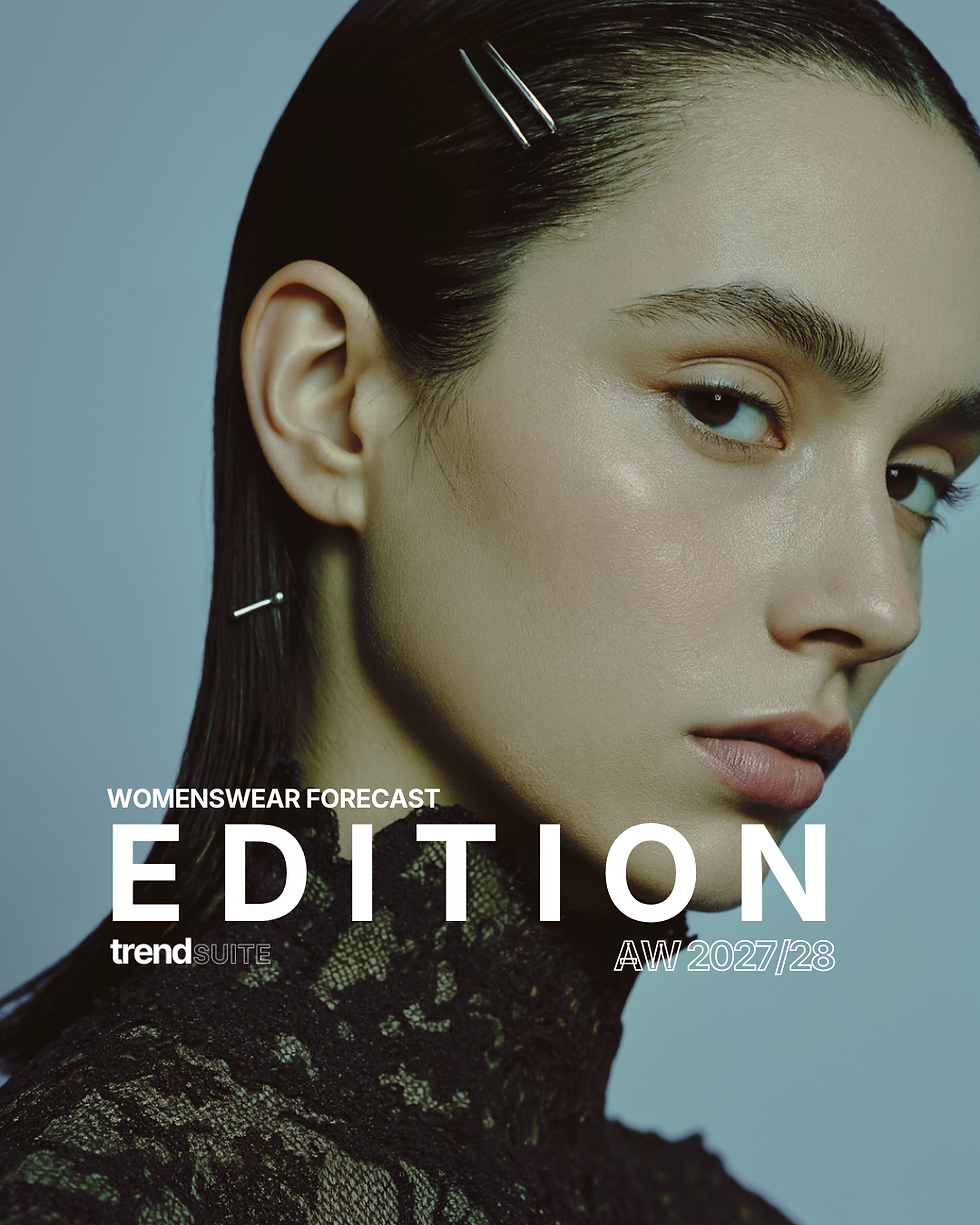
The AW27-28 Womenswear Influences, Colour + Pattern Edition has been developed for designers and product teams who need to understand how the different parts of the season relate rather than researching each decision independently.
Editing is where inspiration becomes identity
Creative teams naturally become attached to good ideas. A print has taken time to develop, a colour has generated enthusiasm internally and a new reference can feel too strong to lose. Yet retaining everything that works individually can leave the final collection without enough hierarchy.
Editing should therefore begin long before the final line review.
It starts when the team decides which ideas are allowed to control the collection and which remain secondary. One colour story might deserve considerable depth while another works better as a small accent. A pattern direction may be strong enough to move across several product areas, while another is more effective as a single statement. A cultural influence may shape material, proportion and tone without ever becoming an obvious visual motif.
Those decisions create hierarchy.
Without it, every idea competes. With it, some ideas lead while others support, creating enough repetition and consistency for the customer to understand the direction without the collection becoming predictable.
The commercial benefit is significant because clarity makes the collection easier to buy, easier to merchandise and easier to communicate. The customer can see what the season is about without being asked to decode a large number of unrelated ideas.
AW27-28 needs a point of view, not more inspiration
The volume of fashion information available to designers makes accumulation extremely easy. The temptation is to keep collecting until the research feels comprehensive, yet the strongest collection often emerges when that process reverses and the team begins removing.
What is the season really saying? Which ideas are repeating for a reason? Which colour relationships are beginning to reinforce the wider cultural direction? Which pattern behaviours make sense within that same territory, and which ones simply feel interesting on their own?
This is why the AW27-28 Womenswear Influences, Colour + Pattern Edition has been developed as three forecasts that work together rather than three unrelated reports.
Influences establishes the wider cultural and aesthetic shifts changing the direction of womenswear.
Colour develops the emerging palette language and the relationships beginning to define the season.
Pattern translates those movements into prints, surfaces and visual direction.
Read together, the forecasts allow you to follow an idea from its wider cultural influence through to the decisions that begin to shape product.
SEE AW27-28 AS ONE CONNECTED SEASON
AW27-28 Womenswear Influences, Colour + Pattern Edition
Three forecasts. One connected seasonal direction.
The AW27-28 Womenswear Influences, Colour + Pattern Edition has been developed for designers and product teams who need to understand how the different parts of the season relate rather than researching each decision independently.
The three forecasts connect wider influence with colour and pattern, allowing you to trace how cultural movement begins to affect palette, surface and visual language. Instead of treating every colour or print as a separate trend choice, the edition provides a framework for understanding what belongs together and where the strongest relationships are beginning to emerge.
The result is a clearer basis for editing your own collection: what deserves greater depth, what strengthens the wider direction and what can be left behind.


Influences, Colour and Pattern have been developed as one connected AW27-28 seasonal system, allowing ideas to be followed from wider cultural direction through to design application.
Stronger collections make fewer ideas work harder
Once the wider seasonal direction is established, the purpose of fashion collection planning changes. The task is no longer to keep adding newness but to make the strongest ideas work harder across the collection.
A key colour can carry more authority when it appears repeatedly in carefully chosen categories rather than being surrounded by several competing palette stories. A strong pattern direction can gain impact through controlled repetition rather than appearing once and disappearing. A cultural influence can shape the overall attitude of the collection without needing to become an obvious theme.
This creates a stronger relationship between creativity and commercial discipline.
For smaller brands in particular, it also matters financially. Every new print, colourway and product direction creates more sampling, sourcing, minimums and inventory. A collection with clearer priorities does not simply look more coherent; it concentrates development resources around the ideas with the strongest reason to exist.
The objective is not minimalism for its own sake. It is precision.
A collection should feel rich because its ideas have been developed intelligently, not because every possible idea has been included.
Final perspective: Fashion collection planning
A collection can have too many good ideas because quality alone does not create coherence. The real work lies in recognising which ideas strengthen one another, which define the season and which become weaker when they are allowed to compete with everything else.
For AW27-28, the opportunity lies in reading cultural influence, colour and pattern as parts of the same movement rather than three separate forecasting decisions. The AW27-28 Womenswear Influences, Colour + Pattern Edition has been built around that relationship, giving designers and product teams a clearer view of how the season fits together before those ideas are translated into product.
Strong fashion collection planning is ultimately an exercise in judgement. It requires enough information to see the possibilities, but enough discipline to decide what belongs.
AW27-28 does not need more inspiration. It needs a stronger point of view.
Choose how you forecast

The Forecast Library
Focused direction when you need it.
Individual fashion trend forecasts for brands that need focused direction across colour, macro trends, print, silhouette, materials and key product categories.
Choose the season and category relevant to your collection, with clear intelligence designed to help you understand what is shifting and turn emerging signals into sharper product decisions.
Join Innovator Elite
The complete Trend Suite forecasting system.
For brands and product teams that need the full view. Access the Forecast Library, every new release, Colour Lab, Macro Trends, Micro Trends, Design Directions and practical resources in one connected platform.
Built for continuous access across seasons and categories, so your forecasting intelligence stays connected rather than pieced together.


