
How Algorithms Became the Most Powerful Force in Fashion Trend Forecasting
What algorithmic culture means for brands, consumers and the future of trend forecasting
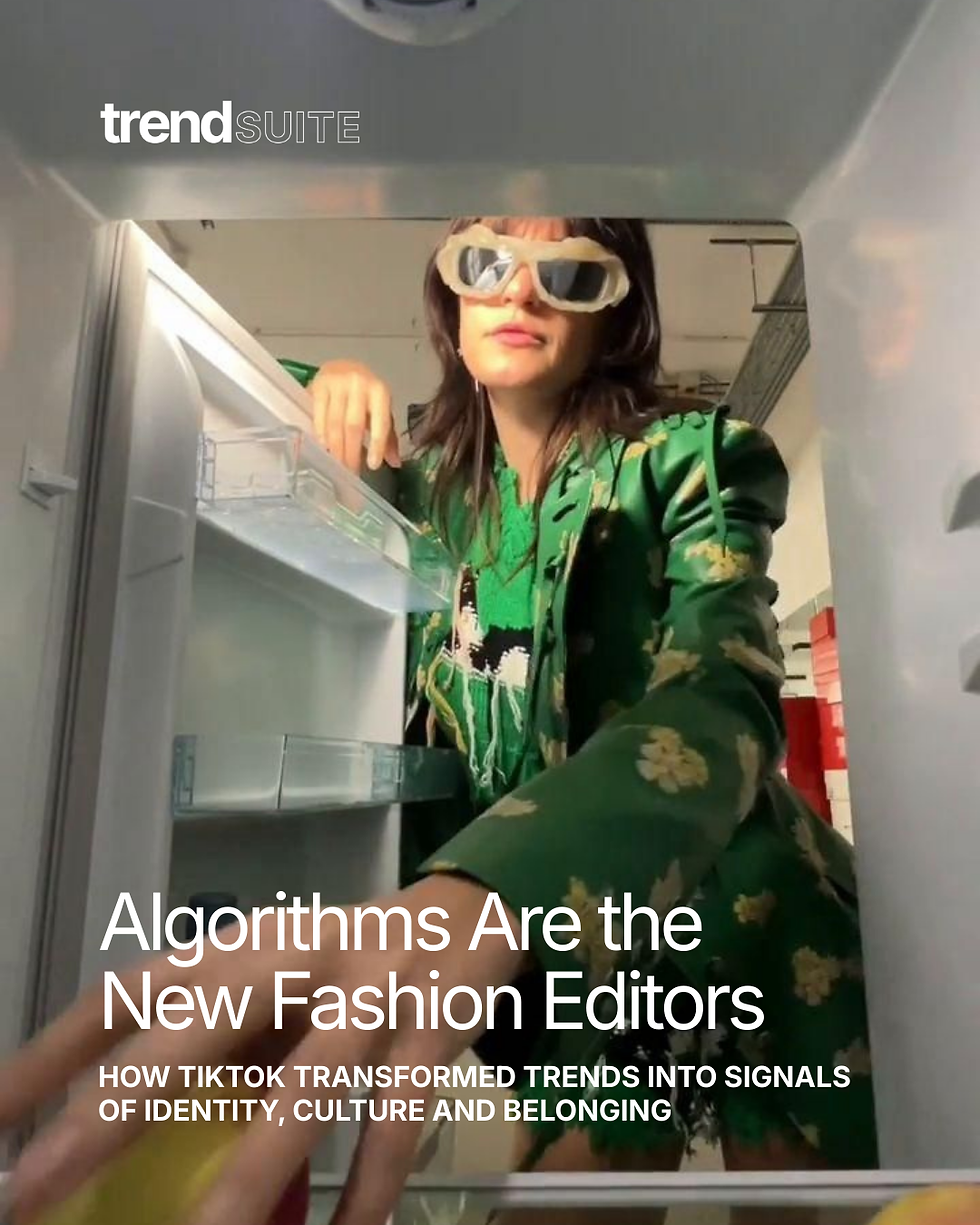
The new fashion editor is not sitting front row. It is inside the feed — ranking, repeating and accelerating whatever earns attention fastest.
This does not mean traditional fashion authority has disappeared. Runways still matter. Editors still matter. Retail still matters. But the route between a visual idea and cultural relevance has changed. Fashion trends no longer move through a neat hierarchy of designer, editor, buyer and consumer. They now move through algorithmic systems that reward speed, recognition, repetition and emotional charge.
A look does not need institutional approval before it gains momentum. It needs circulation. It needs people to respond, save, remix, imitate or reject it. The algorithm watches those behaviours and decides what travels further. In that sense, platforms such as TikTok have not simply made fashion faster. They have changed the conditions under which fashion becomes visible.
This is why trend forecasting has become more complex. It is no longer enough to identify the item, colour or styling trick gaining traction. The more important question is what the algorithm is amplifying — and why consumers are using that aesthetic to say something about who they are, what they value or where they belong.
The feed is not neutral
The feed often appears chaotic. One moment it is Officecore. Then Weird Girl. Then Quiet Luxury. Then DIY fashion, Mob Wife, Coastal Grandmother, ballet flats, wired headphones, archival handbags, trophy vintage, corporate styling, ironic glamour and the next aesthetic label waiting to be named.
But underneath that apparent chaos is a highly structured visibility system.
Algorithms do not select trends because they are culturally important in the traditional sense. They amplify what generates behavioural response. Content that makes people pause, save, share, argue, imitate or identify is more likely to travel. This creates a fashion system where visibility is shaped less by editorial authority and more by collective reaction.
That distinction matters. A trend can become visible because it is genuinely meaningful, but it can also become visible because it is easy to recognise, easy to parody or easy to participate in. The feed rewards legibility. It favours aesthetics that can be named quickly, repeated easily and understood at speed.
This is why so many contemporary fashion trends arrive as complete visual packages. They come with names, moods, references, products and implied lifestyles. They are not simply clothes. They are compressed identity systems.
For brands, this creates both opportunity and risk. Algorithmic culture can expose emerging taste movements earlier than traditional channels, but it can also produce noise at industrial scale. What looks like momentum may be little more than a visibility spike. What looks niche may actually be the early expression of a deeper behavioural shift.
The skill is knowing the difference.
Micro trends are becoming identity signals
The most important shift is not that micro-trends exist. Fashion has always moved through short-lived aesthetic moments. What has changed is the role those trends now play in consumer identity.
Today, aesthetics operate as social shorthand. They allow people to position themselves quickly within culture. To signal taste, humour, aspiration, values, irony, status, softness, rebellion or restraint. A consumer does not simply wear Officecore because they like shirts and tailoring. They may be engaging with the changing meaning of work, ambition, adulthood and professional identity. They do not simply respond to Quiet Luxury because beige coats look expensive. They may be responding to a wider desire for control, discretion and distance from visual overload.
The algorithm accelerates these signals because it groups people around shared behaviour. It identifies affinities before consumers can always articulate them. It notices when a mood is forming. It rewards repetition. It turns scattered visual preferences into recognisable aesthetic territories.
This is why fashion trends can now appear to form almost instantly. The platform does not need the whole market to move. It needs enough people behaving similarly for the system to detect a pattern and push it into wider circulation.
For trend forecasting, that changes the work.
The visible trend is only the surface. The real intelligence lies in understanding the need beneath it. Why this aesthetic? Why now? What tension is it resolving? What desire is it giving form to? What does it allow the consumer to communicate that older fashion codes no longer express?
Without that layer of interpretation, brands risk chasing the label rather than understanding the movement.
Why brands cannot afford to read the feed literally
The danger with algorithmic trend culture is that it encourages reactive design.
A trend appears. Brands notice it. Product teams rush to translate it. By the time it reaches market, the original energy has often moved on.
This is especially risky for fashion brands working across longer development timelines. A viral styling cue can rise and collapse faster than a product cycle. The more directly a brand copies the visible surface of a micro-trend, the more likely it is to arrive late, overexposed or misaligned with its own identity.
The better approach is to read the feed as a signal environment rather than a shopping list.
A repeated interest in corporate styling may not mean every brand needs pencil skirts and ties. It may point to a renewed fascination with structure, competence and adult codes. A wave of DIY fashion may not mean every range needs handmade-looking trims. It may signal a desire for imperfection, authorship and resistance to over-polished product. A surge in “weird” dressing may not mean brands should simply add eccentric accessories. It may indicate fatigue with algorithmic sameness and a growing appetite for personal disruption.
This is where stronger product direction begins.
Not from copying what is visible.
From understanding what the visible trend is responding to.
The strongest brands will use algorithmic culture as an early warning system. They will observe what is gaining traction, but they will not surrender their identity to every spike in attention. They will translate the underlying movement into their own design language — through silhouette, material, colour, print, styling, range architecture and commercial positioning.
That is the difference between trend reaction and trend intelligence.
The future belongs to signal readers
As fashion culture becomes more algorithmic, the volume of information will keep increasing. More aesthetics. More references. More micro-movements. More apparent urgency.
But more visibility does not automatically create better decisions.
In many cases, it creates decision fatigue. Brands are surrounded by signals but unclear which ones deserve action. Teams can see that culture is moving, but struggle to identify what has commercial relevance, what has creative value and what is simply passing through the feed.
This is why trend forecasting becomes more important, not less.
The role of forecasting is not to chase every platform trend. It is to interpret which shifts are meaningful enough to influence product direction. It separates noise from movement. It identifies the cultural drivers behind visual change. It helps brands understand when a trend is a short-lived aesthetic label and when it points to something larger in consumer behaviour.
Algorithms may now shape what fashion sees first.
But they do not decide what should be built.
That responsibility still belongs to brands, designers and product teams with enough discernment to read the signal properly.
The feed may be the new runway.
But the future will belong to the brands that know what to do with what it reveals.

The Forecast Library
Individual fashion trend forecasts for brands that need focused direction across colour, macro trends, print, silhouette, materials and key product categories.
Built to help you understand what is shifting and turn cultural signals into sharper product decisions.
Join Innovator Elite
The full Trend Suite membership for brands that want the complete view.
Access the forecast library, every new release, member-only insight and Fashion CAD Suite tools in one place — so seasonal direction stays connected, not pieced together.

Trend Advisory
A fast expert audit for fashion brands that need sharper direction before development moves forward.
We review your brand, collection or product focus and identify what to refine, strengthen and do next.


